

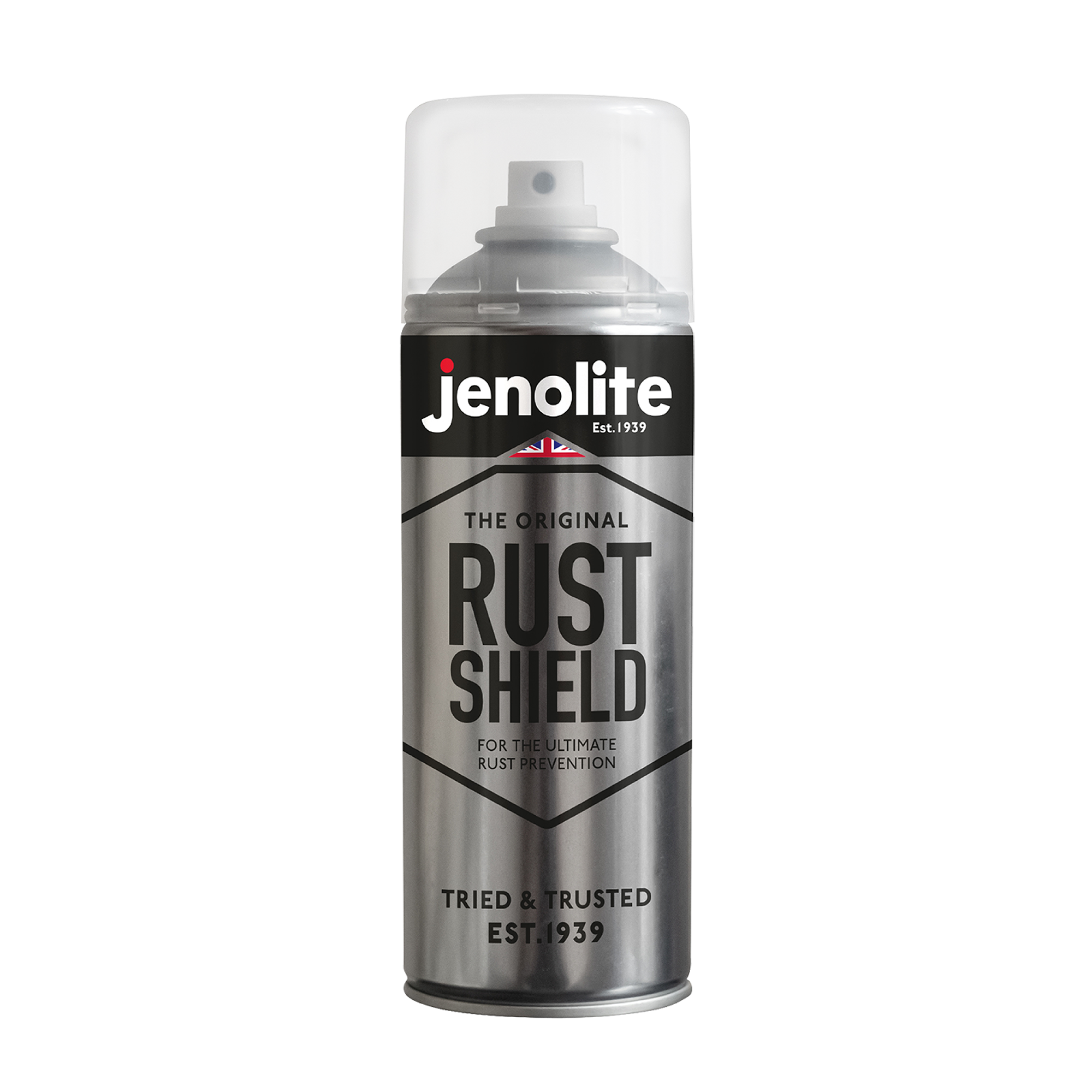
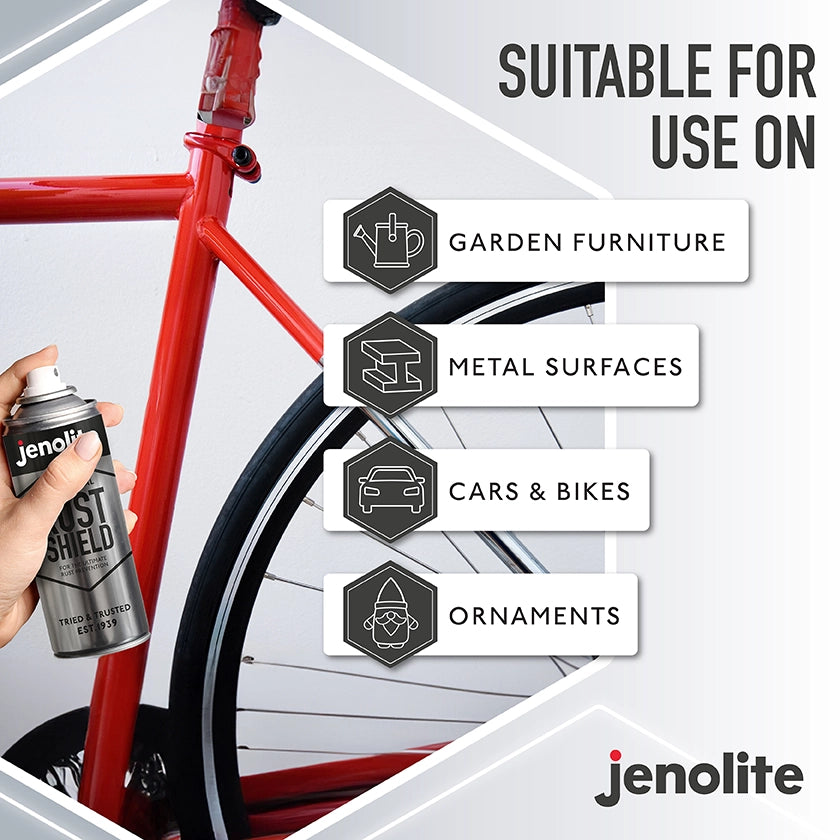
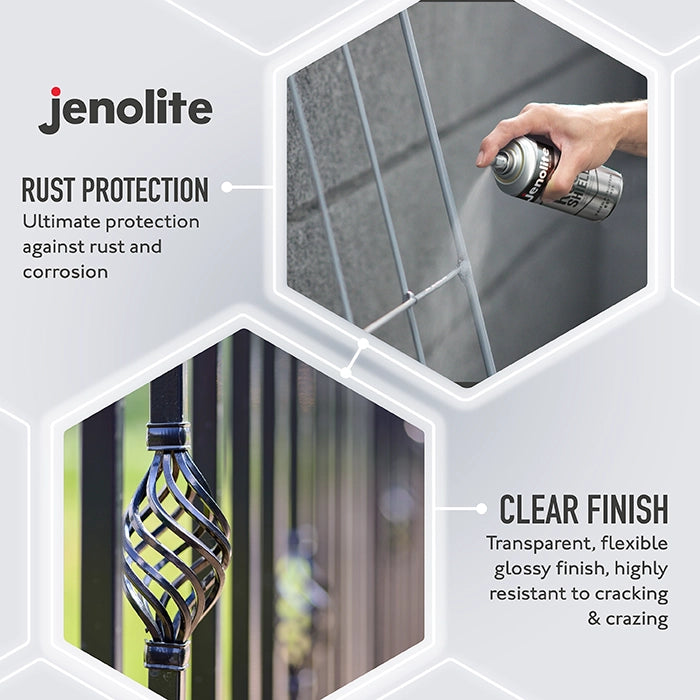
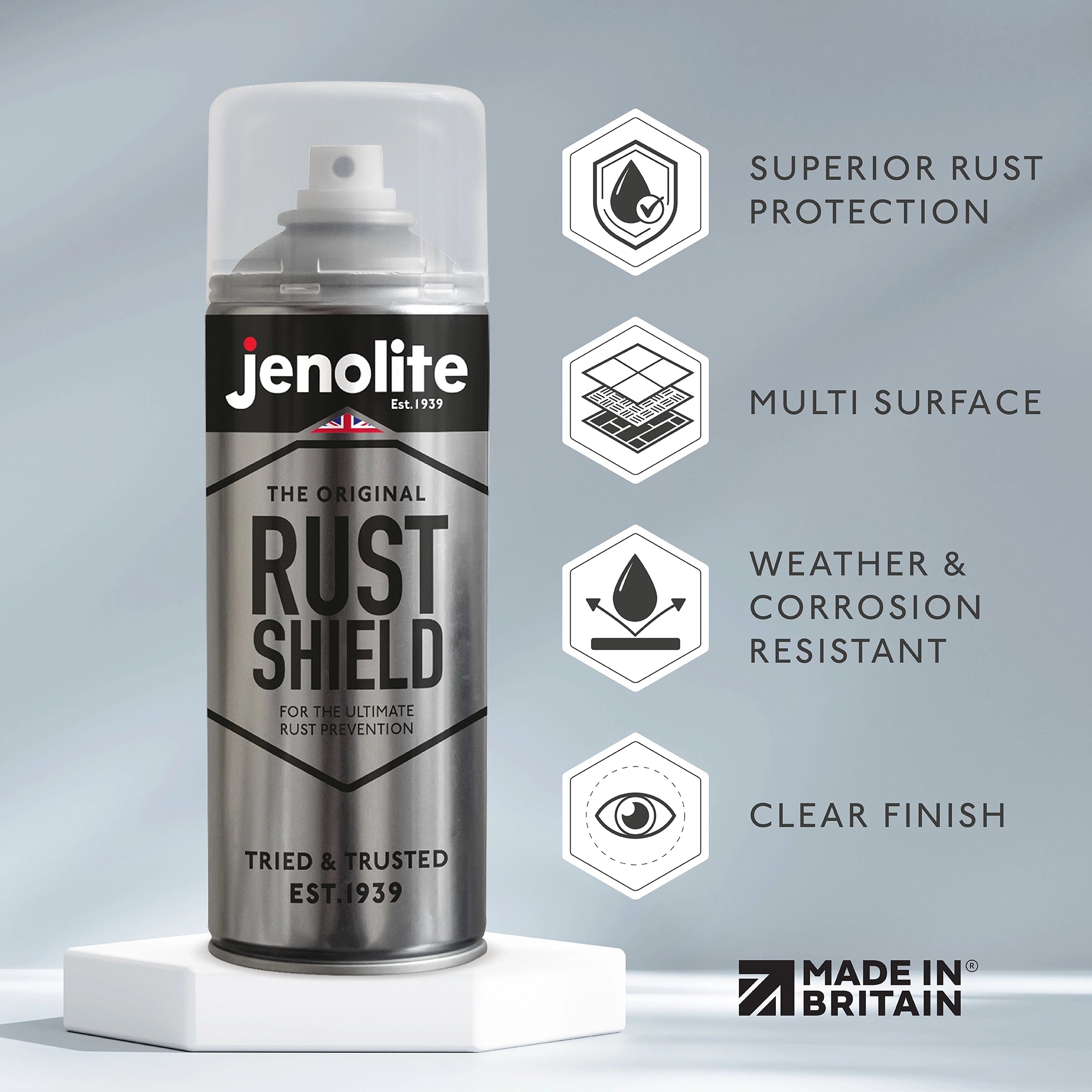
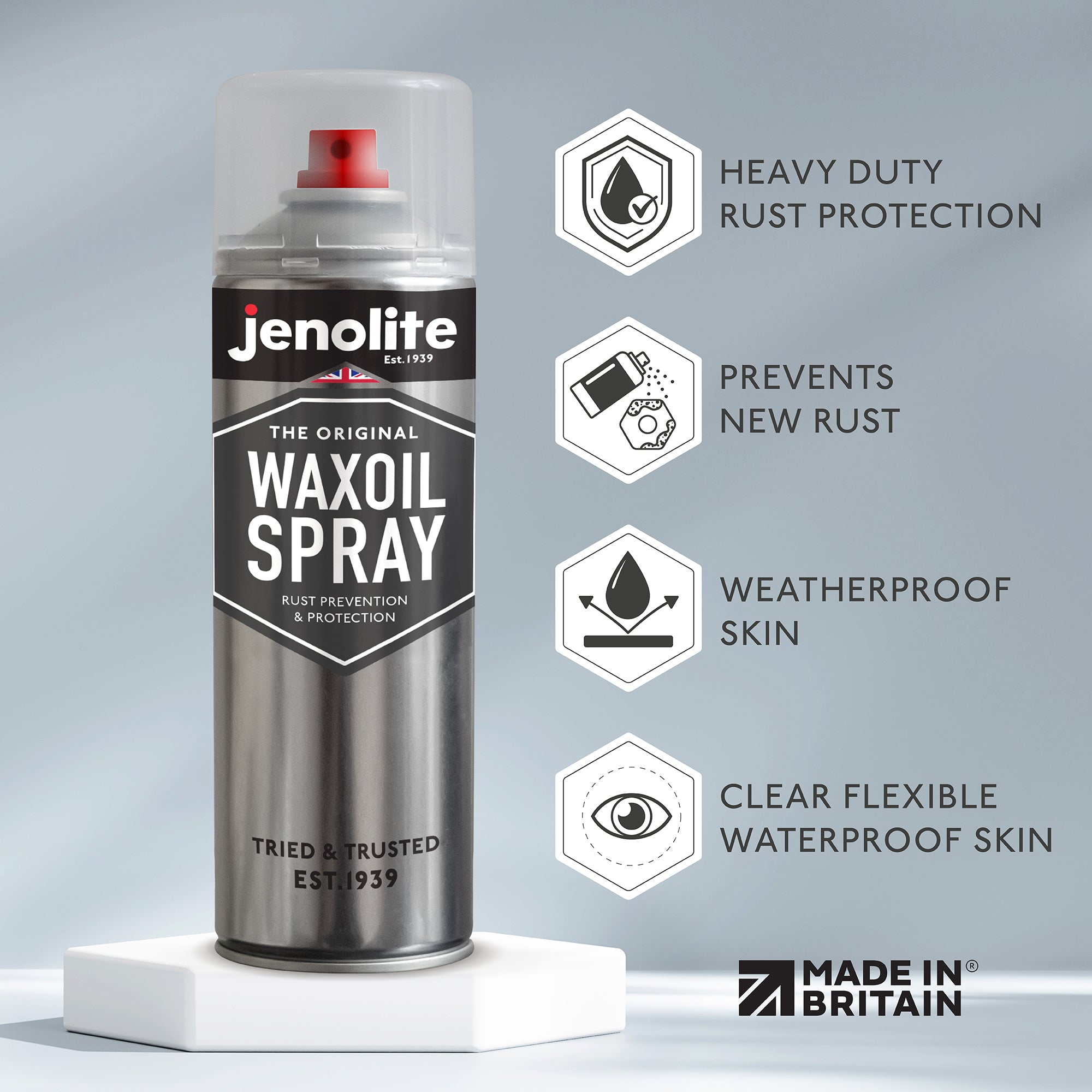
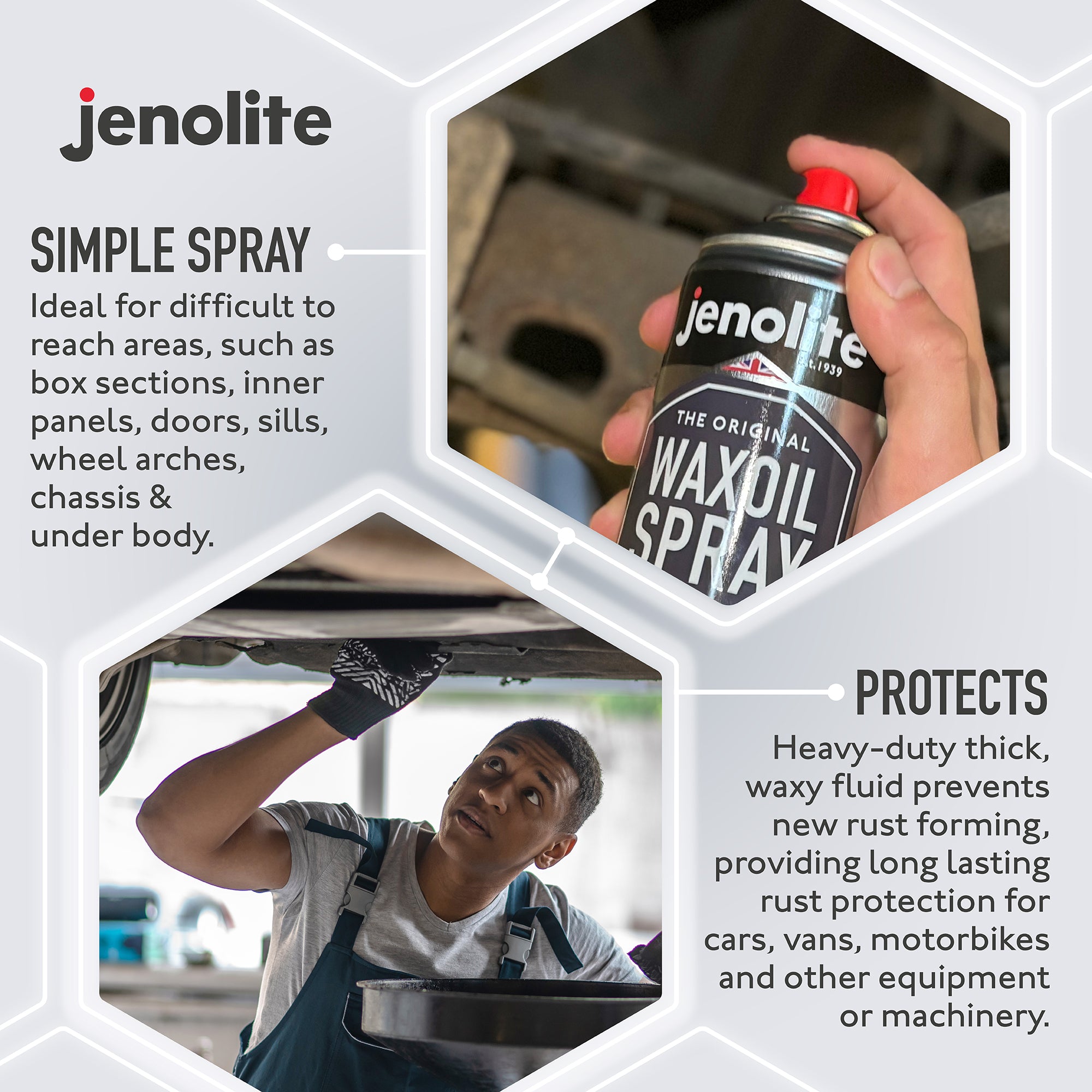
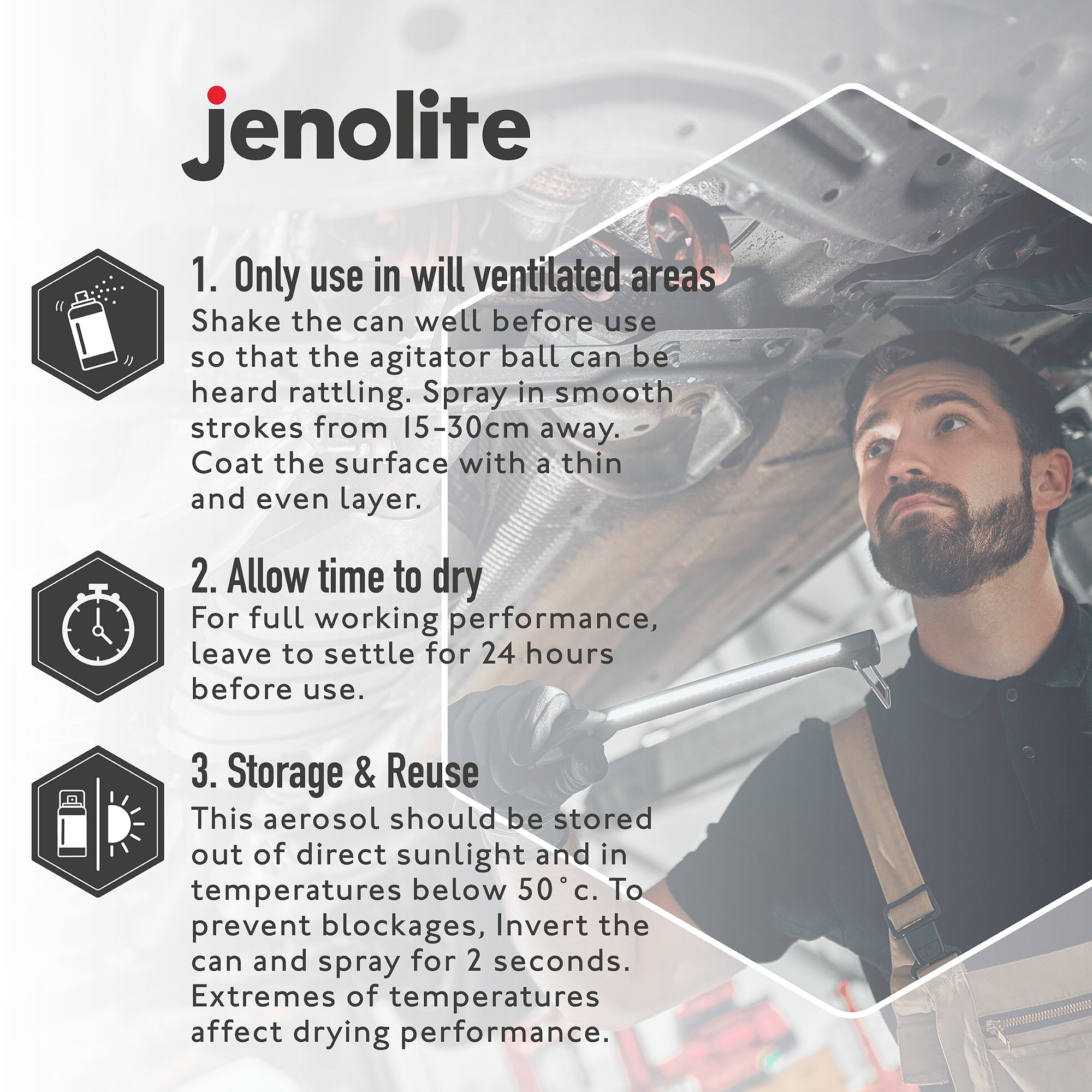











Rust can spoil tools, vehicles, and outdoor items, but the right rust remover spray makes restoration simple. These products break down corrosion, often converting it into a stable layer ready for painting. Many options suit cars, bikes, or garden gear, helping keep metal strong. Discover the best rust remover spray in 2026 with our expert guide, featuring top picks for effective rust treatment on metal surfaces.
Discover Our Best Rust Remover Spray in 2026 - Jenolite
What to Look For in a Rust Remover Spray

Good rust remover sprays act fast and leave no harm to nearby paint or plastic. They often include acids or chelators that grab onto rust particles. Some double as primers, saving steps in repair work. Check for water-based formulas if you want less mess or fumes. Always test on a small spot first, and wear gloves to stay safe. For big areas, sprays with wide nozzles cover better. In the UK, products that handle damp conditions stand out, as moisture brings back rust quickly if not sealed well.
Types of Rust Remover Sprays Available
Sprays come in rust converter types, which turn rust into a black coating, or rust removers that dissolve it completely. Converters work well on light rust, while heavy-duty removers suit thick buildup. Some are eco-friendly with no harsh smells, ideal for indoor use. Others focus on cars, with formulas that cling to undersides. In the UK market, many brands offer aerosols for easy reach into tight spots.
Best Rust Remover Spray in 2026
1. Jenolite - Best Rust Remover Spray
ORIGINAL RUST REMOVER LIQUID TRIGGER SPRAY | 500ML & 1 LITRE
Jenolite Original Rust Remover Liquid Trigger Spray provides convenient, targeted rust elimination for tools, vehicles, and outdoor furniture. Since 1939, this British formula chemically dissolves corrosion, returning surfaces to bare metal.
Spray directly, work in with a brush, and watch rust turn dark grey for effortless removal. Ideal for wheel arches, keels, and gates, it covers 8m² per litre and preps for priming in 30 minutes. Removes oxide from blasting as well, leaving smooth results without rinsing. Perfect for quick fixes in garages or yards.

ORIGINAL RUST REMOVER LIQUID TRIGGER SPRAY | 500ML & 1 LITRE
DESCRIPTION
-
ELIMINATES RUST QUICKLY: This rapid-action remover breaks down rust effectively, exposing clean metal that's prepared for priming.
-
QUICK RESULTS: It chemically interacts with rust for straightforward elimination. The surface is priming-ready within 30 minutes.
-
PERFECT FOR APPLICATION ON: Great for vehicles, body repairs, undercarriages, wheel wells, equipment, bicycles, boat hulls, yacht bottoms, trailer understructures, outdoor entrances, and patio sets, among others.
-
CLEARS OXIDE LAYERS: Ideal for eliminating thin oxide coatings that remain on metal after abrasive blasting like sand or grit methods.
-
USAGE: As with every JENOLITE item, this Rust Remover is user-friendly. Just apply the spray for full surface coverage on rusty areas. Let it penetrate the corrosion while agitating with a wire brush or drill-mounted brush. Maintain the reaction by preventing dryness and reapplying when needed.
-
AREA COVERAGE: Roughly 8 square meters per liter.
-
PRODUCED IN THE UK.
HOW TO USE
Eliminate any oil or grease residues. Scrape off aged paint and flaking rust using steel wool or a wire brush. Verify product suitability at all times. If unsure, trial on a minor section first.
-
Apply straight to the corrosion Vigorously shake the container, adjust the spray nozzle as preferred, and direct it onto the corroded spot. For thorough application, brush it into depressions, crevices, and borders. Make sure unprotected edges and corners receive ample treatment to stop rust from spreading underneath.
Sustain the product's effectiveness by brushing it in every 5 minutes and topping up if needed. Avoid letting the area dry or get sticky. Upright surfaces might need extra care.
Proceed until the rust appears dark gray, then dry the area with a fresh, lint-free rag. To confirm complete rust removal, scrub off the dark gray remnants with a wire brush or steel wool (should rust persist, redo the steps until it's gone).
-
Priming-ready in half an hour Following drying, pause for 30 minutes before using Jenolite Primer or a finishing coat. Optimal outcomes come from priming on the same day.
Avoid pouring leftover Jenolite Rust Remover back into its bottle.
Clean tools and brushes with fresh water right after application. Any spills on nearby paint or skin could stain - rinse off promptly with water.
FAQS
-
What purpose does JENOLITE Original Rust Remover serve? JENOLITE Original Rust Remover is a speedy liquid solution that chemically eradicates rust, restoring the area to pristine metal. It's perfect for clearing rust from instruments, car parts, cycles, machines, outdoor furnishings, and beyond - resulting in a sleek, prepared surface for priming or coating.
-
How does the product function? Its composition chemically engages with iron oxide (rust), disintegrating and detaching it from the metal. After the rust shifts to dark gray, it can be effortlessly wiped or brushed off, uncovering spotless metal below.
-
How does JENOLITE Rust Remover differ from Rust Converter? Rust Remover fully extracts rust, reverting to bare metal - ideal for a fresh start prior to priming or painting. Rust Converter transforms rust chemically into a stable, paint-ready layer without extraction.
-
Which metals is it compatible with? It's designed for ferrous metals like iron and steel. Avoid using on non-ferrous types such as aluminum, brass, or zinc-coated steel, as it could harm or discolor the surface.
-
Is it suitable for painted areas? No. Apply only to bare, rusted metal. Strip away any flaking paint or layers beforehand to ensure proper function.
-
What's the application method for JENOLITE Rust Remover Liquid? Prep: Clear away grease, oil, grime, and loose rust with a wire brush or steel wool. Apply: Shake thoroughly and spray on the rusty section. Brush into grooves, edges, and corners for complete coverage. Maintain: Brush again every 5 minutes and reapply to keep it from drying. Clear residue: Once dark gray, wipe dry and remove leftovers by brushing. Prime: After 30 minutes, add primer or paint that day.
-
What's the typical duration? The rust dissolution usually spans 15 to 30 minutes, based on rust extent and surroundings. Severe cases might need several rounds.
-
Is rinsing required post-application? No need to rinse. Just dry with a clean, lint-free cloth, then wait 30 minutes before priming or painting.
-
How does the rust appear when the reaction finishes? The corroded area will become dark gray, signaling the reaction's end and that rust is neutralized and ready for removal.
-
Is dipping or submerging possible? Yes. The fluid can be sprayed, brushed, or used for immersion, suitable for tiny tools, components, and parts that fit in a container.
-
What if rust lingers after initial use? If rust spots remain, restart the procedure - reapply, maintain activity, and brush until the metal is rust-free and clean.
-
When is the surface paint-ready? When it's clean, gray, and residue-free, let it dry 30 minutes before using JENOLITE Primer or appropriate metal paint.
-
What's the coverage? A 1-liter container handles about 8 square meters, varying with texture and rust level.
-
Suitable for cars or equipment? Absolutely. It's great for vehicle refurbishing and upkeep, covering body panels, frames, wheel areas, bike structures, and tools. Also works for vessels, haulers, and machines.
-
Safe for upright or ceiling surfaces? Yes, though vertical ones demand more oversight. Brush frequently and reapply to avoid drying.
-
Do I need safety gear? Yes. Use gloves, eye shields, and ensure good airflow. Limit skin or paint exposure, as it might stain.
-
What if it splatters on paint or skin? Rinse splashes right away with clean water to avoid stains or discomfort.
-
Can excess liquid be reused? Don't pour used or tainted liquid back, as it could dilute the formula or trigger early reactions in the container.
-
Storage tips? Keep in a cool, aired spot, protected from freezing, sun, and heat. Seal tightly when stored.
-
Origin? JENOLITE Original Rust Remover Liquid is crafted in Britain, relied upon by experts since 1939 for superior rust eradication and metal revival.
RUST CONVERTER EPOXY AEROSOL | 500ML | TURNS RUST INTO READY TO PAINT SURFACE
This aerosol rust converter from Jenolite excels as a spray option for tackling active rust on ferrous metals, such as car panels, chassis, or outdoor railings. It neutralises corrosion quickly, transforming it into a stable, epoxy-based layer that's ready for painting without extra priming. Perfect for automotive repairs or weather-exposed items, it offers robust protection against moisture and chemicals. Based in the United Kingdom, Jenolite has built a reputation for reliable rust solutions. It applies evenly in hard-to-reach spots, drying fast for efficient workflows. While ideal for moderate rust, it bonds strongly for long-lasting results.
-
Quick-drying formula, UV resistant with topcoat, no need for separate primer.
-
Suited for DIY and professional use, prevents rust return, enhances paint adhesion.

RUST CONVERTER EPOXY AEROSOL | 500ML | TURNS RUST INTO READY TO PAINT SURFACE
DESCRIPTION
-
RUST CONVERTER SPRAY: JENOLITE Rust Converter Epoxy Aerosol serves as an effective rust remedy for metallic areas, swiftly transforming corrosion into a solid base suitable for coating.
-
FAST ACTING & SIMPLE TO USE: This rust converter aerosol interacts with corrosion to form a durable substance in just 15 minutes. Apply it directly to rusty spots for quick and effective corrosion control and avoidance. After hardening, the darkened layer can remain untouched or be covered with various water-based or oil-based coatings.
-
EPOXY BASED RUST CONVERTER: Its sophisticated blend eliminates and alters rust while serving as a barrier to stop its recurrence. Perfect as a rust primer for metallic items.
-
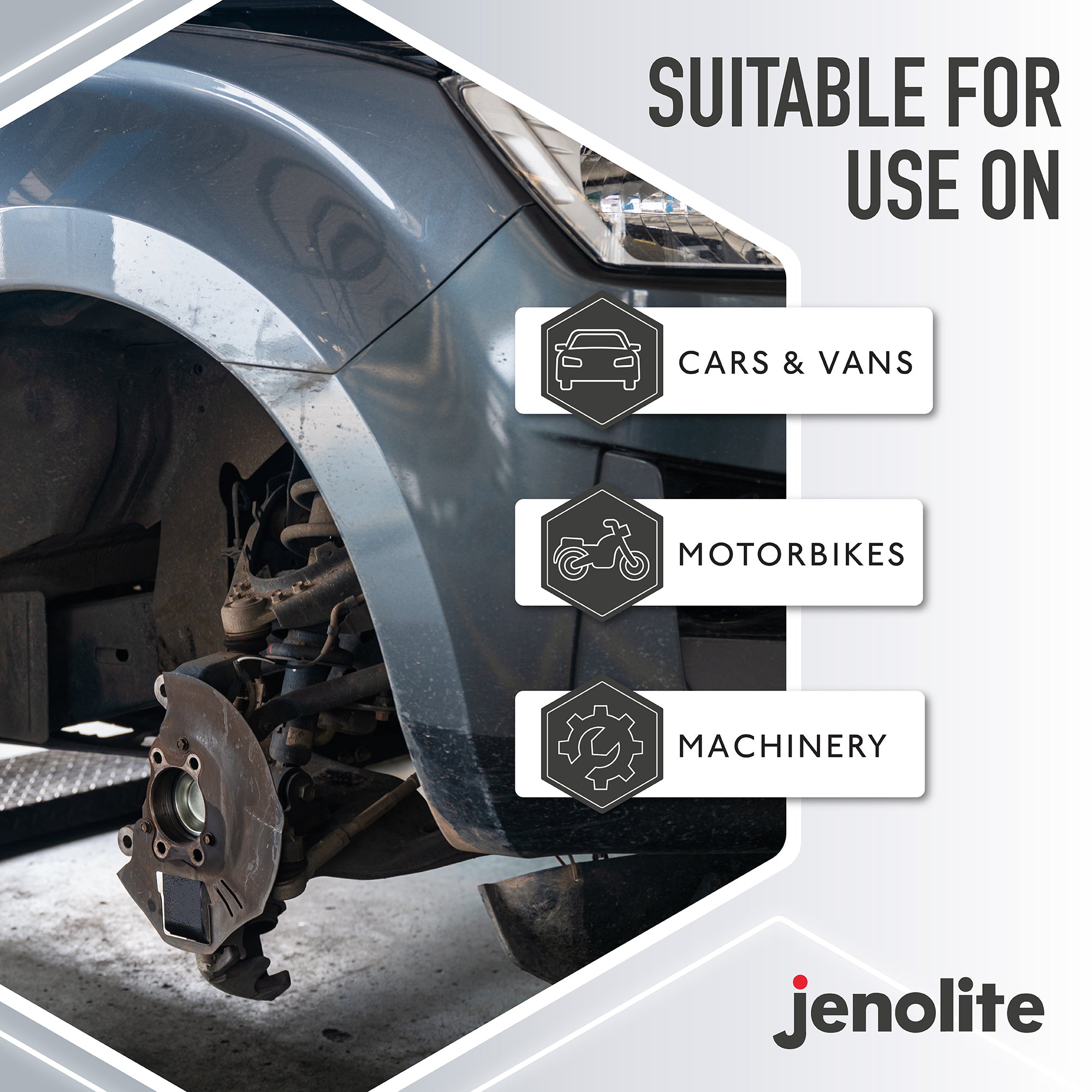
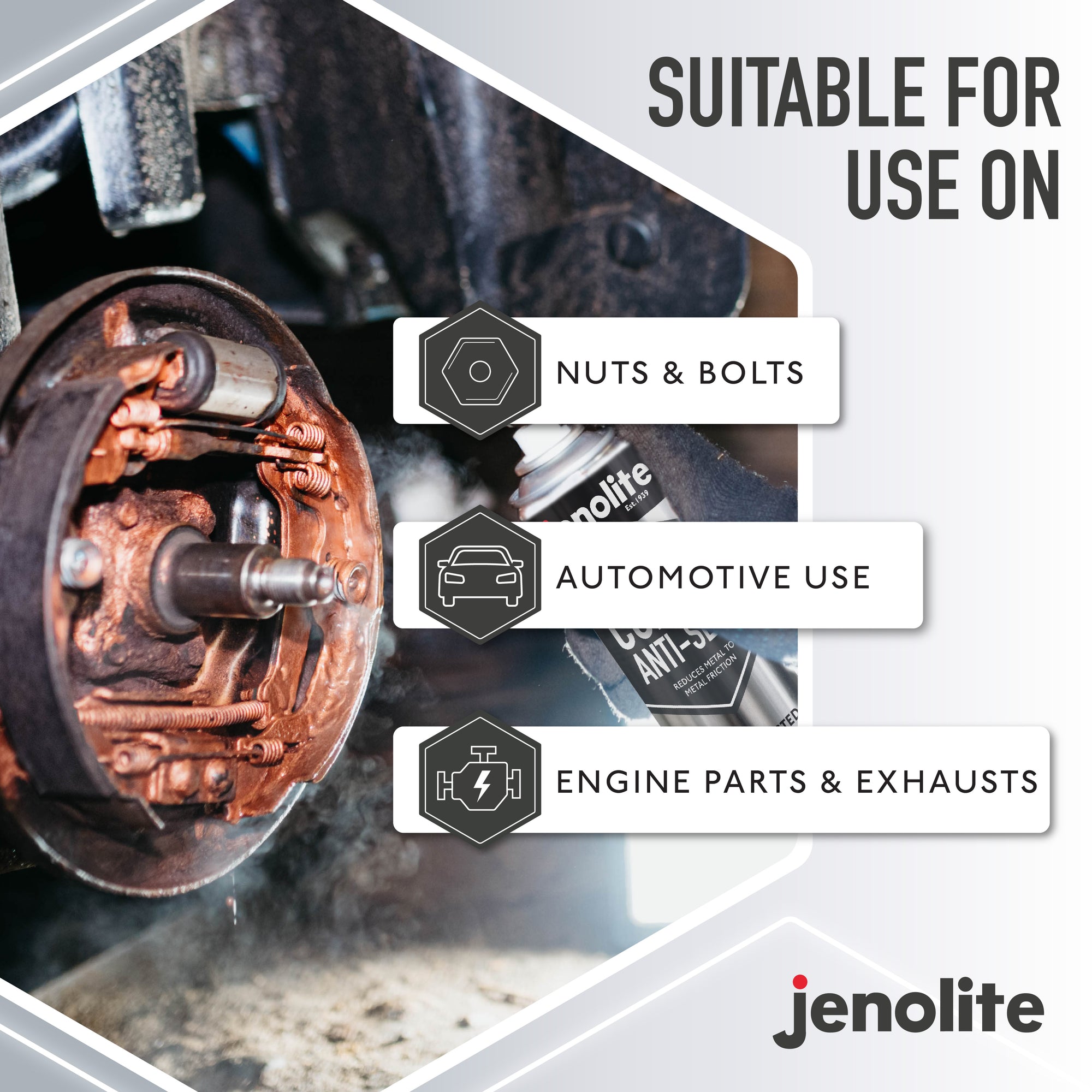
AUTOMOTIVE USE & MORE: Great for iron-containing metal areas, it's an excellent rust transformer and remedy for automobiles (like cars, trucks, motorcycles), equipment, devices, outdoor fences, furnishings, and beyond. Eliminates corrosion in hidden spots.
-
LONG-TERM RUST PROTECTION: Forms shielding layers that eradicate rust and guard against moisture, air, CO2, and corrosive elements for enduring defense against oxidation.
-
EASY TO USE: Just apply straight onto corrosion and observe the transformation into a paint-ready dark violet or black layer. Impervious to humidity, oxygen, and CO2; post-treatment, the area can be coated without requiring an undercoat.
-
COVERAGE: Roughly 2.5m² coverage from a 500ml container.
HOW TO USE
Eliminate any oil or lubricant residues. Strip away aged coatings and flaky rust using abrasive pads or a brushing tool.
-
Prepare the surface Clear away all unattached grime and particles from the target zone. Clean and dry the spot if needed. Scrape off prior layers with a brushing tool and sanding material.
-
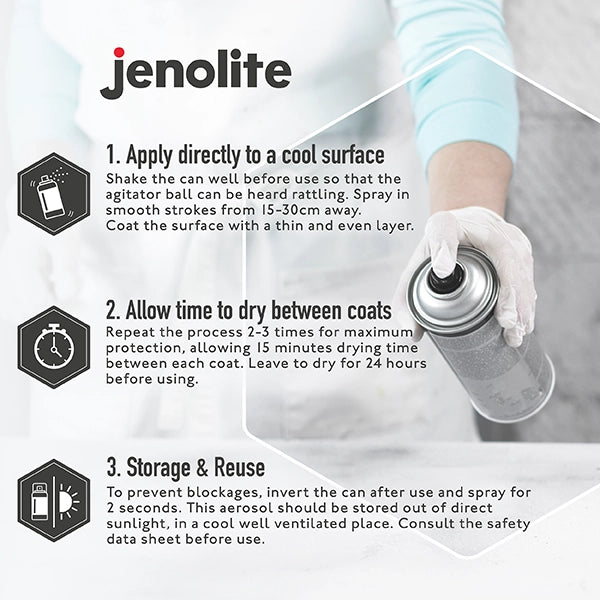
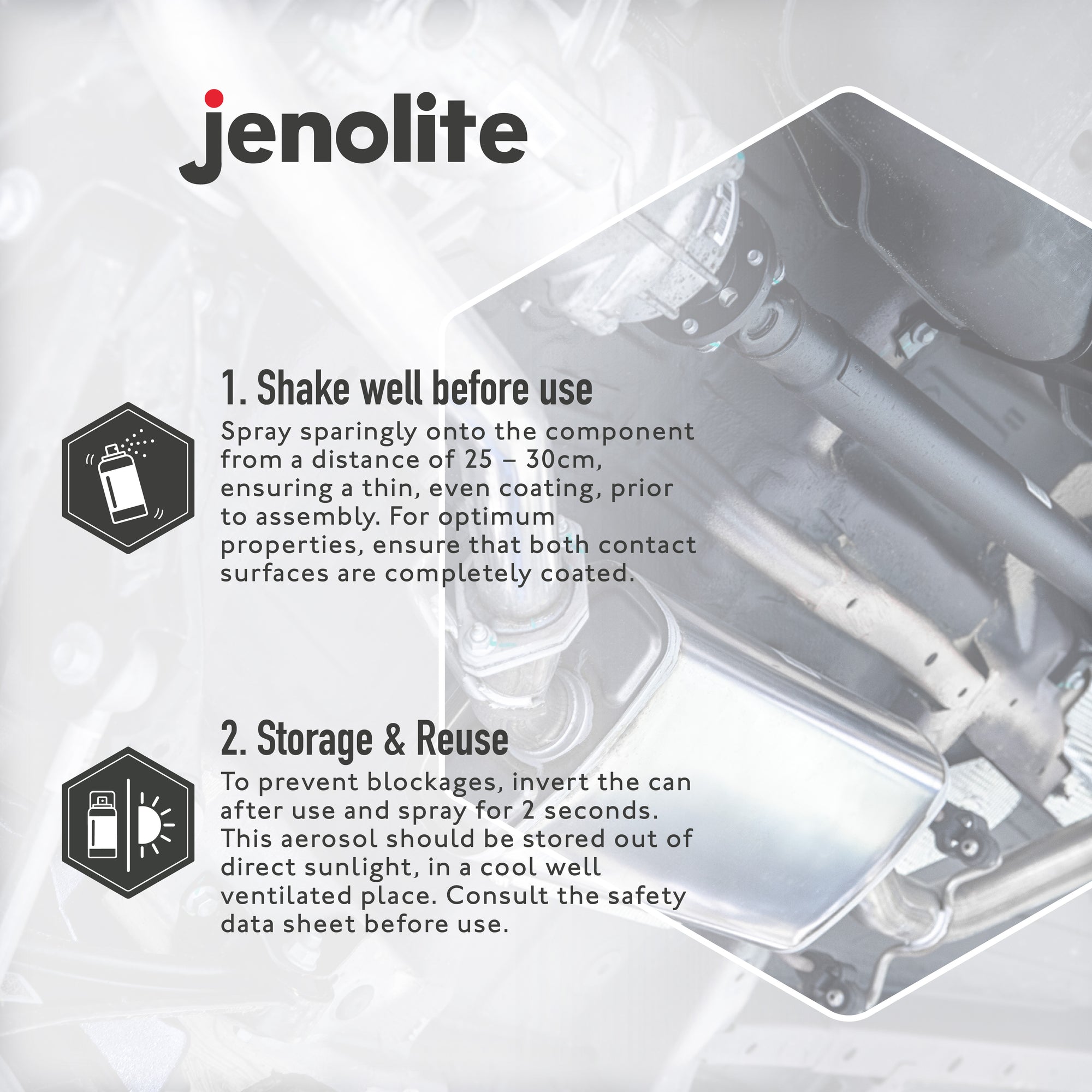
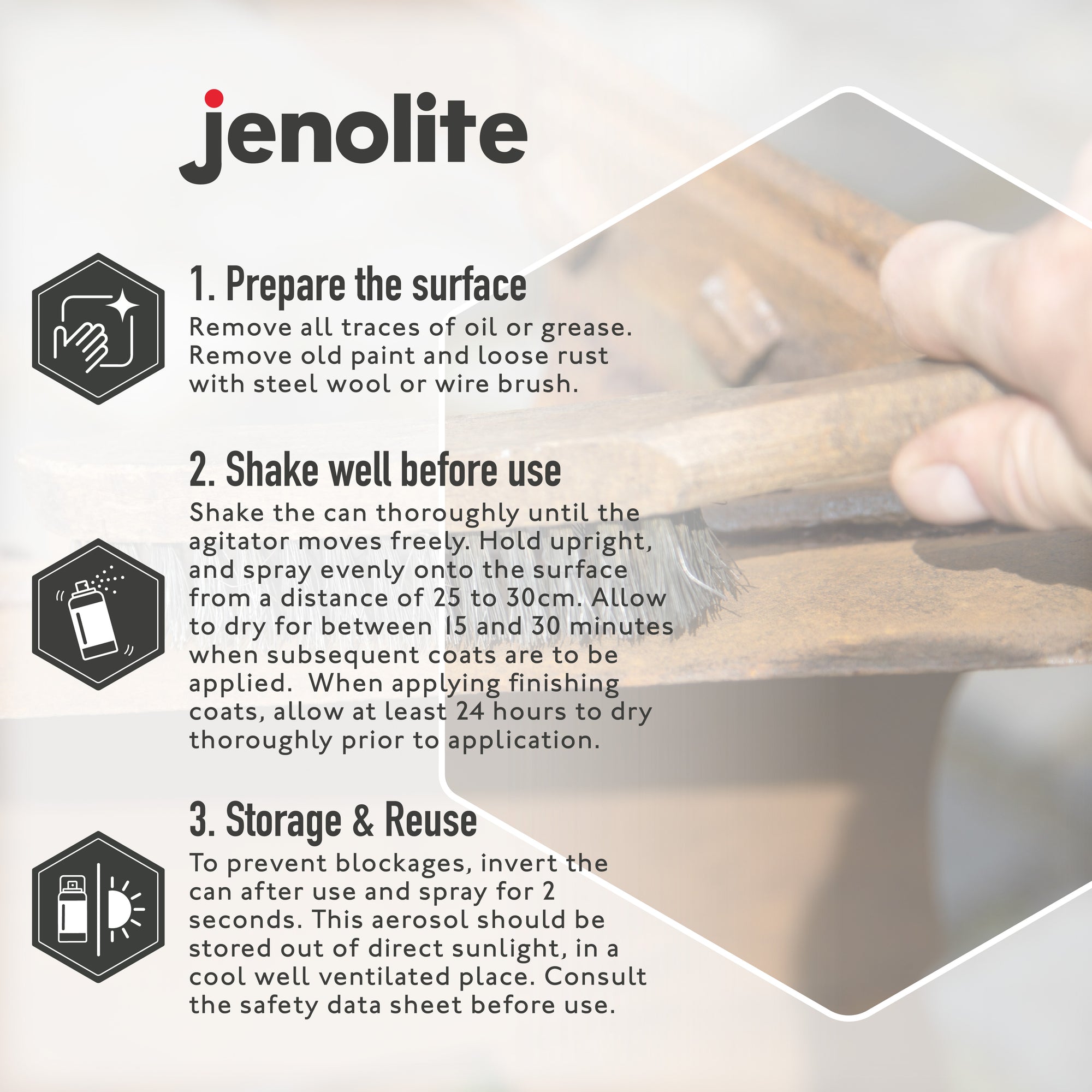
Shake can vigorously before use Dispense from a distance of 15cm to 25cm using thin layers. Avoid over-spraying. Use multiple thin applications to prevent drips. Add 2 or 3 thin layers, with a 15-minute drying interval between them. Optimal outcomes come from roughening the corroded area with a brush or abrasive prior to spraying.
-
Storage & Reuse After finishing, flip the container and press the nozzle briefly to avoid clogs. Keep this spray away from sunlight in a shaded, airy spot. Refer to the Safety Data Sheet for details.
FAQS
-
What is JENOLITE Rust Converter Epoxy Aerosol used for? JENOLITE Rust Converter Epoxy Aerosol acts as a rapid rust remedy that changes corrosion on metals into a firm, coatable film. It halts decay and delivers ongoing safeguard against additional rust buildup — ideal for cars, gear, machines, and exterior metal items.
-
How does it work? The innovative epoxy-infused mix chemically bonds with rust, converting it to a robust, dark material that blocks out water, air, and CO2 — halting further decay and yielding a surface primed for painting.
-
What makes the epoxy version different from the standard rust converter? The epoxy-boosted mix yields a tougher, longer-lasting film that functions as both a corrosion blocker and base coat. It delivers superior bonding, toughness against impacts, and extended defense over typical water-based options.
-
Do I need to apply a primer after using this spray? No. Following curing, the processed area serves as its own base. Paint over it with most oil or water-based options, or keep it as a solo defensive layer.
-
How long does it take to work? The converter bonds with rust in 15 minutes, darkening the area to black or deep purple during the process. Let it dry completely prior to coating or touching.
-
How do I apply JENOLITE Rust Converter Epoxy Aerosol?
1. Prepare the surface: Scrape off loose corrosion, coatings, soil, and oils using a brush or abrasive.
2. Shake well: Agitate the container strongly for a minimum of 1 minute to blend ingredients.
3. Spray evenly: Position the can 15–30 cm away and apply in steady, uniform passes for complete cover.
4. Allow to react: Permit the formula to process for 15 minutes.
5. Dry and paint: When blackened and dry, leave it or add a top layer.
-
What colour does it turn when applied? During the reaction, the area shifts to black or deep purple, showing successful corrosion neutralization.
-
Can I leave the treated surface unpainted? Yes, the dark epoxy layer offers solid rust defense alone. For better longevity, sun protection, and looks, a final coat is suggested.
-
Is it suitable for automotive use? Definitely. The spray design suits vehicle panels, frames, brakes, and undersides, plus motorcycles, trucks, and similar transports.
-
What surfaces can I use it on? It's appropriate for ferrous (iron-inclusive) metals like regular steel and iron casts. Avoid non-ferrous types such as aluminum, stainless, or zinc-coated ones.
-
Can it be used on previously painted surfaces? No. Apply only to bare rusted metal for effective bonding. Clear away paint and loose rust first.
-
How much area does one can cover? One 400ml unit spans about 2 square meters, varying by surface state and layer depth.
-
How long should I wait before painting over it? Permit full drying — usually 1–2 hours in standard settings — before topping with paint.
-
What type of paint can I use afterward? Both water and oil-based varieties work. For peak performance and lasting shield, opt for JENOLITE Direct to Metal Paint or an appropriate car finish.
-
Can it be used outdoors? Yes. The epoxy film resists weather, dampness, and chemicals well, fitting indoor or outdoor metal applications.
-
What precautions should I take when using it? * Use in airy spaces or outside. * Skip application in sun, on warm areas, or breezy weather. * Steer clear of fire, sparks, and heat sources. * Don gloves, goggles, and a respirator to prevent vapor intake.
-
How should I store the can after use? To stop valve jams, turn upside down and spray 2 seconds post-use. Keep in a temperate, dry, ventilated area, far from sun and heat over 50°C.
-
What should I do if the nozzle becomes blocked? Flip and spray briefly to unblock. If persistent, dip in thinner or swap with a fresh one from another spray.
-
How durable is the protective coating? The epoxy layer ensures prolonged rust resistance via a sealed shield against humidity, air, CO2, and corrosives. With an overcoat, it endures for years.
RUST CONVERTER LIQUID TRIGGER SPRAY | 500G & 1 LITRE
Jenolite's trigger spray rust converter handles larger rusted surfaces on vehicles, machinery, or gates with ease, stopping corrosion in its tracks. The liquid formula ensures thorough coverage on uneven areas, creating a durable barrier against environmental wear. It's great for preventive care on tools or bodywork, allowing same-day painting. Headquartered in the United Kingdom, the brand emphasises quality in metal treatments. It reacts swiftly, minimising prep time. Best for indoor or outdoor projects, though thicker rust may benefit from light sanding first.
-
Even application, resists chemicals, integrates with paints.
-
Popular for maintenance, halts rust spread, ready for overcoating quickly.

RUST CONVERTER LIQUID TRIGGER SPRAY | 500G & 1 LITRE
DESCRIPTION
-
QUICK-REACTING RUST TRANSFORMER: JENOLITE Rust Converter is a rapid, water-based solution that chemically alters rust into a solid foundation, stopping further corrosion by forming a shield against moisture, air, and carbon dioxide.
-
PRIMED FOR PAINTING: After treatment, it changes rust into a surface ready for direct painting with most current paints, eliminating the primer requirement.
-
ENDURING SAFEGUARD: It repels humidity, oxygen, and carbon dioxide, delivering sustained defense to the applied regions.
-
SIMPLE APPLICATION: Effortless to apply—just spray onto rusty spots and see it convert to a black/purple paintable layer. Skip rinsing or wiping; allow to dry, and the formerly corroded spot is set for coating.
-
OPTION TO LEAVE AS-IS OR OVERCOAT: Once used, it may stay untreated or be finished with water-based or oil-based paints.
-
STRAIGHTFORWARD PROCESS: Fast-working rust neutralizer that bonds with rust to produce a durable compound in just 15 minutes.
-
COVERAGE: Roughly 6 to 8 square meters per liter.
-
MADE IN BRITAIN
HOW TO USE
Eliminate any oil or grease residues. Scrape off old coatings and flaky rust using steel wool or a wire brush. Verify product suitability at all times. If unsure, trial on a minor section first.
-
Apply straight to corrosion Vigorously shake the container, adjust the spray nozzle as preferred, and mist directly on the corroded section. For complete coverage, brush into pitted zones, crevices, and borders. Make sure edges and corners are thoroughly coated to prevent rust spreading underneath.
-
Allow 15 minutes Jenolite Rust Converter shifts treated areas to a blue-black tone as it interacts with rust. IF THE SPOT REMAINS UNCHANGED, REAPPLY FOLLOWING 30 MINUTES. Rinsing is unnecessary.
-
Set for painting after 3 hours Add top layer after at least 3 hours. Optimal outcomes when painted on the same day.
-
Storage & reuse Avoid pouring leftover Jenolite Rust Converter back into the bottle. Clean brushes and tools with fresh water right after application. Spills on adjacent surfaces or skin could stain - rinse off promptly with water.
Seal the container securely. Keep in a cool, airy spot. Steer clear of freezing temperatures and sun exposure. Shield from frost. Maintain storage between 5ºC and 15ºC.
FAQS
-
What is JENOLITE Rust Converter Trigger Spray used for? JENOLITE Rust Converter Trigger Spray serves as a swift rust remedy that transforms rust into a sturdy, paint-ready layer without requiring a primer, neutralizing corrosion and encapsulating the metal for extended defense against dampness and decay.
-
How does it work? The aqueous mixture chemically bonds with rust to create a resilient blue-black layer that halts additional rusting, forming a protective seal against humidity, air, and carbon dioxide—the primary rust triggers.
-
What makes the trigger spray different from the standard liquid version? The spray mechanism offers fast, uniform application with little work, perfect for broad or irregular surfaces and enabling simple use without extra equipment.
-
Do I need to apply a primer after using it? No, the dried converted layer functions as a primer equivalent, allowing direct application of most water or oil-based paints.
-
How long does it take to work? It responds in 15 minutes, changing the surface to blue-black during rust transformation, with a minimum 3-hour dry time before painting.
-
Can I leave the converted surface unpainted? Yes, it can remain bare for solid rust shielding, though painting over it enhances longevity and UV durability.
-
How do I apply JENOLITE Rust Converter Trigger Spray? Prep the area: Clear away grease, oil, flaking paint, and loose rust with a wire brush or steel wool. Shake thoroughly: Mix evenly by shaking the bottle. Spray on: Cover the rusty spot uniformly, brushing into edges and corners if required. Await reaction: Let sit 15 minutes for the blue-black shift. Dry fully: Wait at least 3 hours prior to painting.
-
What if the rust doesn’t change colour? If no blue-black appears in 30 minutes, add another layer to guarantee complete transformation.
-
How much area does it cover? It spans about 6–8 square meters per liter, varying with rust depth and surface state.
-
Can it be used on any metal surface? It's ideal for ferrous metals like vehicle bodies, equipment, tools, outdoor furniture, and fences, but not for aluminum, stainless steel, or galvanized materials.
-
Can it be applied over existing paint? No, direct contact with rusty metal is essential for reaction; strip paint and loose rust beforehand.
-
How soon can I paint over it? Paint once dry, usually after 3 hours, ideally on the same day for superior results.
-
What types of paint can be used afterward? Both oil and water-based options work; consider JENOLITE Direct to Metal Paint or equivalent for optimal endurance.
-
What finish does it leave? Post-treatment, it yields a matte blue-black appearance, signaling effective rust conversion and sealing.
-
Does it provide long-term protection? Yes, the layer builds a strong barrier resisting humidity, air, carbon dioxide, and bacterial proliferation, blocking rust recurrence.
-
Can it be used outdoors? Yes, suitable for indoor/outdoor settings, providing strong resistance to weather and chemicals when cured and coated.
-
What precautions should I take during use? Use gloves and eye gear always. Work in ventilated spaces. Prevent skin or nearby surface contact (staining possible). Avoid freezing or sunny conditions.
-
How should I clean tools and equipment after use? Rinse brushes, sprays, and items in clean water immediately; don't reuse excess in the container.
-
How should I store the product? Securely close and place in a cool, ventilated area from 5°C to 15°C; guard against frost and sunlight.
-
Where is it made? JENOLITE Rust Converter Trigger Spray is produced in Britain, upholding the reliable standards JENOLITE has delivered since 1939.
2. Evapo-Rust Super Safe Rust Remover

This water-based rust remover stands out for its non-toxic formula, making it a safe choice for home use on metal parts like tools and car components. It works by soaking into rust without harming paint or non-ferrous metals, lifting corrosion gently over time. Users often praise its ability to restore items to a clean state without scrubbing.
Based in the United States, the product has gained popularity in the UK market for its eco-friendly approach. While it performs well on light to moderate rust, heavier buildup may need repeated applications. Some find the odour mild compared to acid-based options, and it leaves no residue after rinsing. Overall, it offers reliable results for everyday rust issues on vehicles and household items.
-
Key features: Non-corrosive to skin, reusable formula, effective on iron and steel.
-
Facts and Information: Works best when items are fully submerged, suitable for antique restoration, leaves metal ready for painting.
3. WD-40 Specialist Rust Remover Soak

Known for its versatility, this rust remover from a trusted brand penetrates deep into corroded areas, breaking down rust on nuts, bolts, and chains. It's ideal for automotive and bike maintenance, where quick action is needed. The soak method allows it to dissolve rust without damaging surrounding materials.
Headquartered in San Diego, United States, WD-40 has a long history in lubrication and protection products, now expanded to rust solutions available widely in the UK. It may require agitation for stubborn spots, but many appreciate its non-fuming nature. Weaknesses include slower action on thick rust layers, yet it shines in preventing re-rusting when followed by a protectant.
-
Key features: Biodegradable, no harsh acids, multi-surface safe.
-
Facts and Information: Often used in workshops, compatible with chrome, extends tool life.
4. CLR Calcium, Lime & Rust Remover

This multi-purpose cleaner tackles rust alongside lime and calcium deposits, making it handy for bathroom fixtures and outdoor metal. Its spray form clings to surfaces, dissolving rust stains on tiles and metal without heavy scrubbing. From the United States, CLR is a household name for tough cleaning tasks, easily found in UK stores. It works fast on surface rust but might need extra time for deeper corrosion. Some users note a strong scent, though it dissipates quickly. On the downside, it can etch certain metals if left too long, so testing is key.
-
Key features: Fast-acting foam, septic-safe, versatile for home use.
-
Facts and Information: Effective on plumbing parts, removes hard water marks, popular for kitchen appliances.
5. Corroseal Water-Based Rust Converter

As a converter, this product turns rust into a stable, paintable surface, ideal for priming vehicles and fences. It applies easily via spray, forming a protective barrier against future moisture. Based in the United States, Corroseal focuses on marine and industrial applications, with strong availability in the UK for DIY projects. It excels on mild rust but may not fully penetrate very thick layers. Users like its low odour and easy cleanup. A potential drawback is the need for thorough surface prep to avoid peeling.
-
Key features: Non-flammable, extends metal lifespan, bonds with primers.
-
Facts and Information: Used in boat maintenance, inhibits corrosion spread, suitable for structural steel.
6. Bilt Hamber Hydrate-80 Rust Converter

This UK-made converter neutralises rust on car chassis and tools, creating a tough coating ready for paint. Its gel-like spray adheres well to vertical surfaces, preventing drips. Headquartered in Essex, United Kingdom, Bilt Hamber is renowned for automotive care products. It handles moderate rust effectively, though heavy scaling might require mechanical help first. Many value its water-based formula for reduced environmental impact. It can sometimes leave a slight residue if not rinsed properly.
-
Key features: High adhesion, phosphate-free, durable finish.
-
Facts and Information: Favoured by classic car owners, stops rust progression, works on damp surfaces.
7. Hammerite Kurust Rust Converter

A popular choice for spot treatments, this converter transforms rust into a stable layer on gates and railings. The spray version applies precisely, drying to a smooth base for overcoating. From the United Kingdom, Hammerite specialises in metal paints and treatments. It acts quickly on light rust but may struggle with pitted areas. Users often highlight its ease for small jobs. One issue is potential discolouration on non-metal nearby.
-
Key features: Quick drying, no primer needed, weather-resistant.
-
Facts and Information: Common in garden projects, protects against elements, integrates with Hammerite paints.
8. Rustbuster Fe-123 Rust Converter

This heavy-duty converter is geared toward professional use on vehicles and machinery, converting rust to a black, inert compound. Its spray penetrates crevices, offering long-term protection. Based in the United Kingdom, Rustbuster provides specialist rust solutions. It performs on severe rust but requires good ventilation due to fumes. Some find it thicker than expected, aiding coverage. Drawbacks include longer curing time in cold weather.
-
Key features: Tannic acid base, high coverage, bonds strongly.
-
Facts and Information: Ideal for underbody work, used in restoration shops, prevents flash rust.
9. Loctite Naval Jelly Rust Dissolver

This jelly-form spray dissolves rust on tools and hardware, rinsing away to bare metal. It's effective for detailed work, clinging without running. Headquartered in Germany (Henkel group), Loctite is global in adhesives and sealants. It removes light rust swiftly but may etch aluminium. Many like its controlled application. A con is the phosphoric acid smell.
-
Key features: Gel consistency, fast dissolution, easy rinse.
-
Facts and Information: Suited for precision parts, common in mechanics, restores shine.
10. Star Brite Rust Stain Remover Spray

Designed for marine and outdoor use, this remover lifts rust stains from fibreglass and metal without harming gelcoats. It sprays on and wipes off, ideal for boats and patios. From the United States, Star Brite focuses on boating products, accessible in the UK. It handles surface rust well but less so on embedded corrosion. Users appreciate its non-abrasive nature. Potential weakness is needing repeats for tough spots.
-
Key features: Biodegradable, safe on fabrics, quick results.
-
Facts and Information: Popular for hull cleaning, removes oxidation, versatile for home exteriors.
How Rust Forms and Why Sprays Help
Rust starts when iron meets oxygen and water, creating flaky oxide. In the UK, with frequent rain, this happens fast on untreated metal. Rust remover sprays interrupt this by removing oxide or sealing it. Many contain inhibitors that block moisture. For cars, check undercarriage often, as road grit worsens it. Tools stored in sheds benefit from sprays too.
Tips for Using Rust Remover Spray Effectively
-
Prep by cleaning dirt off the area.
-
Shake the can well, then spray evenly from 20cm away.
-
Let it sit as directed, usually 10-30 minutes.
-
Wipe or rinse residue.
-
For stubborn spots, repeat.
-
Seal with paint or wax after.
-
In cold weather, warm the metal first for better penetration.
-
Store sprays upright in a cool place.
|
Application Area |
Best Spray Type |
Dry Time |
Suitability for UK Weather |
|
Cars |
Converter |
20 min |
High, salt-resistant |
|
Tools |
Remover |
10 min |
Medium, indoor use |
|
Gates |
Gel Spray |
30 min |
High, outdoor durable |
|
Bikes |
Aerosol |
15 min |
High, moisture-proof |
Common Mistakes to Avoid with Rust Remover
-
Skipping prep leads to poor adhesion.
-
Over-spraying wastes product and causes drips.
-
Not sealing afterwards allows rust back.
-
Using rust remover spray on hot metal can evaporate the formula too fast.
-
Always ventilate the area.
FAQ
What is a rust remover spray?
A rust remover spray is a specialised product that targets corrosion on metal surfaces, converting or dissolving rust to restore the material. It typically works by chemically reacting with the iron oxide, creating a stable layer that prevents further oxidation. Rust converter products provide options for different application needs, ensuring effective results on tools, vehicles, and household items.
How does rust converter spray differ from traditional rust removers?
Rust converter spray transforms rust into a protective coating, making it ready for painting without complete removal, while traditional removers often dissolve rust entirely. This conversion process seals the surface against moisture, offering longer-term defence against recurrence. For metal restoration projects, using a converter can simplify preparation and enhance durability.
Can rust remover spray be used on automotive parts?
Rust remover spray is suitable for automotive parts such as chassis, wheels, and bodywork, helping to halt corrosion in areas exposed to road salt and weather. Apply it to clean, dry surfaces for best adhesion, and follow with a primer for added protection. Check compatibility with specific metals by testing on a small area first.
Is rust remover spray safe for indoor use?
Many rust remover sprays are water-based and non-toxic, making them safe for indoor applications when used with proper ventilation. They produce minimal fumes compared to acid-based alternatives, reducing health risks during use. Always wear gloves and follow safety guidelines to avoid skin contact.
How long does rust protection last after using a remover spray?
The protection from a rust remover spray can endure for years if followed by proper sealing or painting, depending on environmental exposure. Regular maintenance, like applying a clear lacquer, helps extend the lifespan. Factors such as humidity and salt influence longevity, so inspect treated areas periodically.
Read Also:
Discover Our Best Rust Remover Spray in 2026 - Jenolite



